Concrete, bamboo and clay: How future building materials can be more sustainable
Home
>Media Hub
>Concrete, bamboo and clay: How future building materials can be more sustainable
Concrete, bamboo and clay: How future building materials can be more sustainable
10 April 2026
This article was first published in The Edge Singapore City & Country on 10 April 2026.
Concrete has become the most widely used construction material in the world because it offers durability, versatility and affordability at a scale that few other materials can match, says Clarisse Loh, head of sustainability at YTL Cement. Given the pace of urbanisation and infrastructure development globally, it is unlikely that cement and concrete will be replaced “in the foreseeable future”, she adds.
Instead, the “real opportunity” lies in evolving and decarbonising these materials, while also exploring complementary alternatives that are suitable for “specific applications”, says Loh.
Some architects have experimented with potentially viable alternatives — and bamboo shows promise.
“Bamboo has seen encouraging take-up with some interesting buildings coming up all around the country,” says Malaysia-based Tan Loke Mun, founder of DTLM Architect, which operates out of Kuala Lumpur. “The Public Works Department (JKR) recently held a bamboo design competition for public bus shelters and covered walkways, for which I was a member of the jury.”
According to Tan, the Malaysian architect and self-professed “bamboo advocate” Low Ewe Jin is carrying out workshops to guide the country’s technical agency on “bamboo basics for durability” and ease of construction.
Already a celebrated architect, Low joined Bali-based sustainable architecture firm Ibuku in 2015, where he oversaw 50 bamboo building projects over five years.
Since then, Low has pivoted TENTEN Design — his own architectural practice — towards delivering bamboo projects in the region, launched an online advocacy blog Better Bamboo Buildings and published his own book, Bamboo Ark I: Exemplary Bamboo Buildings.
Tan, who served as president of the Malaysian Institute of Architects (PAM) from 2005 to 2007, experimented with bamboo and mud bricks as potential green building materials. “Mudbricks is still in its infancy; I think we will see more take-up with rammed earth rather than adobe,” he adds, referring to a building material made of sun-dried earth and straw.
Markus Roselieb is another proponent of bamboo as a building material. The founder and principal architect of Chiangmai Life Architects and Chiangmai Life Construction says bamboo has a higher tensile strength than steel.
“It has a compressive strength equal to concrete, but it is lightweight; it is beautiful to look at, and it is carbon-negative. Additionally, it doesn’t rust. So, it is more functional than steel,” says the Austrian.
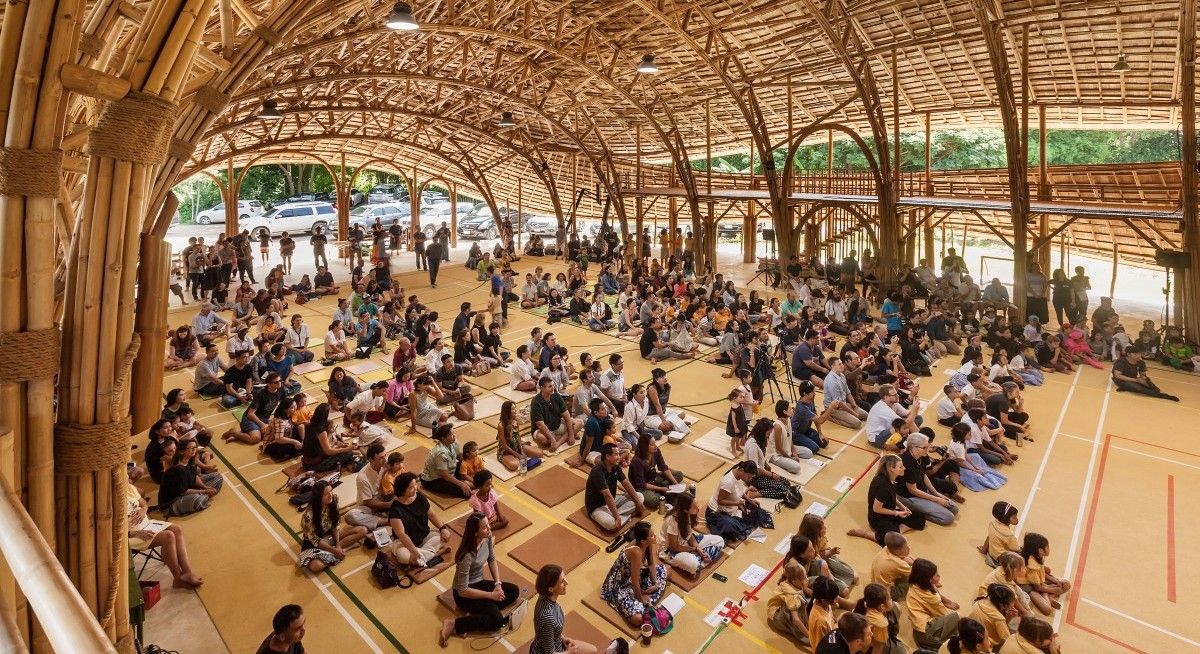
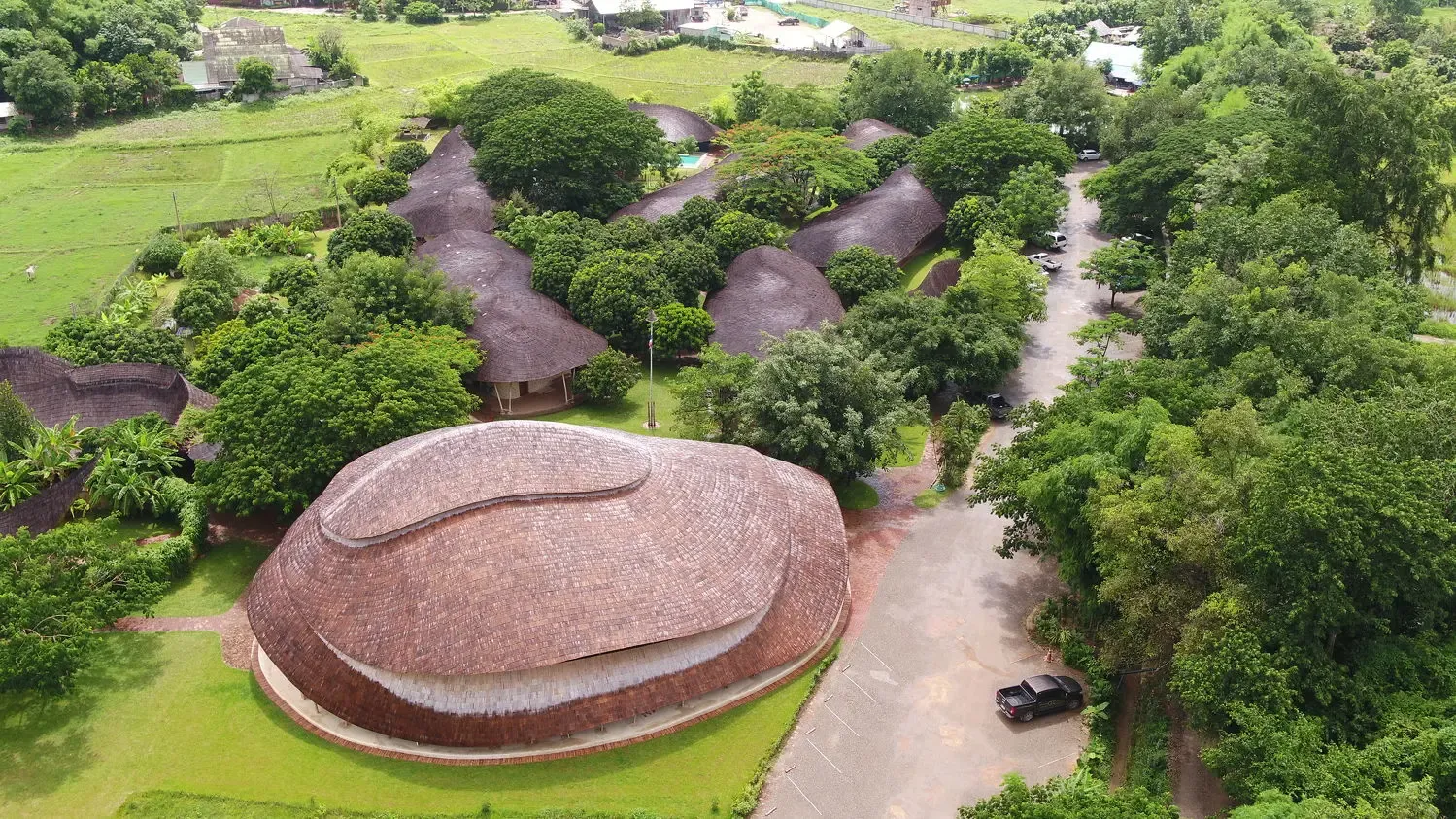
A self-taught architect, Roselieb founded his practice in 2010 during the construction of Panyaden International School in Chiang Mai. The school buildings are constructed using natural materials, and a Bamboo Sports Hall designed by Roselieb and his colleague, Tosapon Sittiwong, has won multiple awards.
Completed in 2017, a three-tiered roof resembles the petals of a lotus flower. Bamboo trusses measuring 17m span the 782 sqm hall, which hosts courts for basketball, volleyball, badminton and futsal.
Sustainability can only work together with superior function, says Roselieb. “Functionality must always be the primary goal for architects. The materials we chose — bamboo and earth — fulfil these criteria.”
The biggest obstacle to widespread acceptance, according to Roselieb, is the “contrasting image” of bamboo and earth as “poor man’s materials that don’t last” compared to mainstream materials like steel and concrete.
“It is an image problem, and of course, people don’t change easily. Also, supply chains don’t change easily [and] legislation is always far behind. But there is light at the end of the tunnel — as more and more engineers are jumping on board the bamboo train,” he adds.
‘Forget about Bauhaus’
Roselieb has stated in interviews that architects should forget about Bauhaus, which he calls the “biggest disease in architecture”. Influenced by modernism, Bauhaus design emerged in the 1920s alongside materials such as poured concrete and exposed steel.
“I find it peculiar that Bauhaus is at the centre of what they call modern architecture,” says Roselieb. “Bauhaus is 100 years old; would you call a 100-year-old car a modern car?”
Bauhaus’ “dominant position” in academia and production means “most professors still teach Bauhaus as the ultimate form of modern architecture” and “supply chains are set up to deliver for the Bauhaus style”, he adds.
“Concrete, steel and square boxes — [these are what] people have come to believe is the best or even only way to build a house… I find that organic forms and natural materials create the most functional space for happiness and well-being,” says Roselieb.
Optimising concrete use
Later this month, Roselieb, Tan and Loh will share their respective takes on sustainable building materials that are “realistically deployable” today in a panel discussion at The Edge Singapore’s Sustainable Construction Symposium 2026. The three experts form the first panel at the half-day conference, happening April 29 at Pan Pacific Orchard, and the session will be moderated by Au Foong Yee, editor emeritus at The Edge Malaysia.
Return to Media Hub
|
Search More Articles
About Us
Malayan Cement Berhad (MCB) is the Malaysian operations of YTL Cement Group and the country’s leading building materials company. As part of a regional Group committed to helping you build better, MCB provides an integrated suite of high-performance materials and sustainable environmental services that support construction of all scales – from homes to major infrastructure.
With a legacy that spans more than 70 years, MCB operates integrated cement plants in five locations, four grinding plants, three cement terminals, two depots and over 50 ready-mixed concrete batching plants two drymix plants, three aggregate quarries, and a dedicated R&D facility – the Construction Development Lab.
MCB offers a full range of building solutions, including cement, clinker, ready-mixed concrete, drymix, and quarry products, all designed to meet the evolving needs of the Malaysian market. The company also delivers sustainable innovations such as its ECO Product Range and offers environmental services.
With a fleet of over 1,500 trucks covering more than 120,000 kilometres daily, MCB ensures efficient and reliable delivery to customers across Peninsular Malaysia. Its scale, operational reach, and long-standing experience position it as a key partner in nation building.
MCB offers a full range of building solutions, including cement, clinker, ready-mixed concrete, drymix, and quarry products, all designed to meet the evolving needs of the Malaysian market. The company also delivers sustainable innovations such as its ECO Product Range and offers environmental services.
With a fleet of over 1,500 trucks covering more than 120,000 kilometres daily, MCB ensures efficient and reliable delivery to customers across Peninsular Malaysia. Its scale, operational reach, and long-standing experience position it as a key partner in nation building.
Copyright © 2026 Malayan Cement Berhad [195001000048(1877-T) | All rights reserved.
Aduan
